21st November 2025
The latest stage of the River South Esk Catchment Partnership’s Nature Restoration Fund “Restoring the River South Esk” project has been completed.
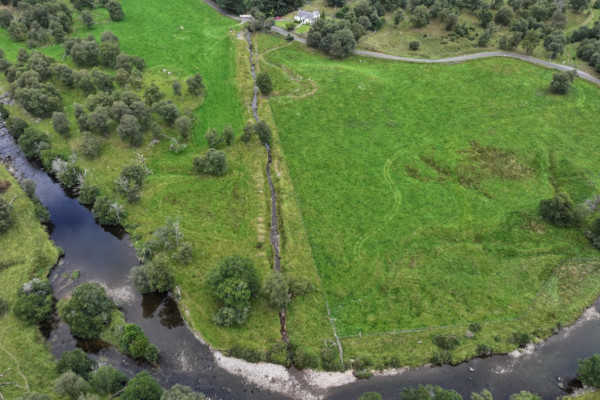
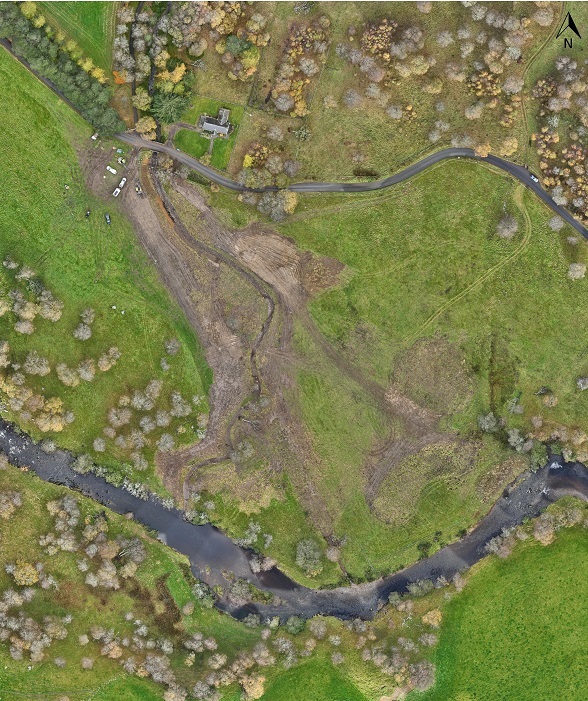
This important phase of RSECP’s project has seen a historically straightened 250m stretch of the March Burn in the upper River South Esk catchment at Glen Clova, re-meandered and two-hectares of land returned to a more natural state.
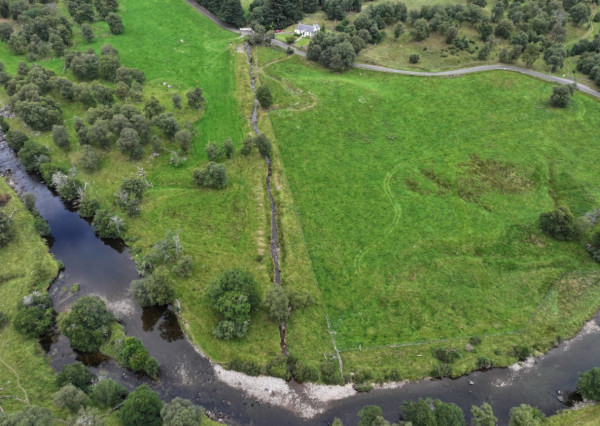
Surveys and modelling identified an historical river channel, which has guided the burn’s realignment. Artificial flood embankments have been removed and the channel realigned to encourage natural river processes.
The burn itself has been afforded a generous buffer zone to allow for the sideways erosion and deposition of natural river materials. This has been fenced off from livestock to allow the growth of vegetation and for native trees to take root and grow.
Dee Ward of Rottal Estate said: “I am really pleased that this project has now completed, having been a number of years in planning and development.
“It is the second burn we have re-wiggled now on Rottal and forms part of wider ecosystem and nature recovery plans we have for the estate alongside, in the short term, 30 hectares of wetland restoration and 700 hectares of native tree planting and natural regeneration.”
RSECP’s overall plan is restoring the river and its habitats in numerous ways, including riverside tree planting, wetland creation and protecting the hill and mountain environments to nature’s benefit. It will simultaneously strengthen the area’s resilience to environmental challenges set by the changing climate.
In 2024, the project, which is aimed at restoring habitats in the River South Esk catchment, received the backing of more than £1.4m from the Scottish Government’s Nature Restoration Fund, managed by NatureScot.
RSECP is a broad and cross sector collective delivering project work since 2010. Core partners and landowners are working together to deliver the RSECP’s largest project to date of which the March Burn forms one of its key elements.
Partners delivering the Nature Restoration Fund project are Forestry and Land Scotland; Esk Rivers and Fisheries Trust; RSPB Scotland; Cairngorms National Park Authority; Angus Council; and landowners Rottal Estate and Clova Estates. In addition, cbec eco engineering were employed at the design and construction supervision phases, while McGowan Environmental Ltd carried out on-site construction.
The project could not be delivered without the continued contribution of landowners at Rottal Estate and Clova Estate and is a successful model of public, private and third sector landscape scale restoration.
The partnership project will also provide new opportunities for communities to engage with nature, participate in its restoration and enjoy biodiversity in the Angus foothills and easternmost parts of the Cairngorms National Park.
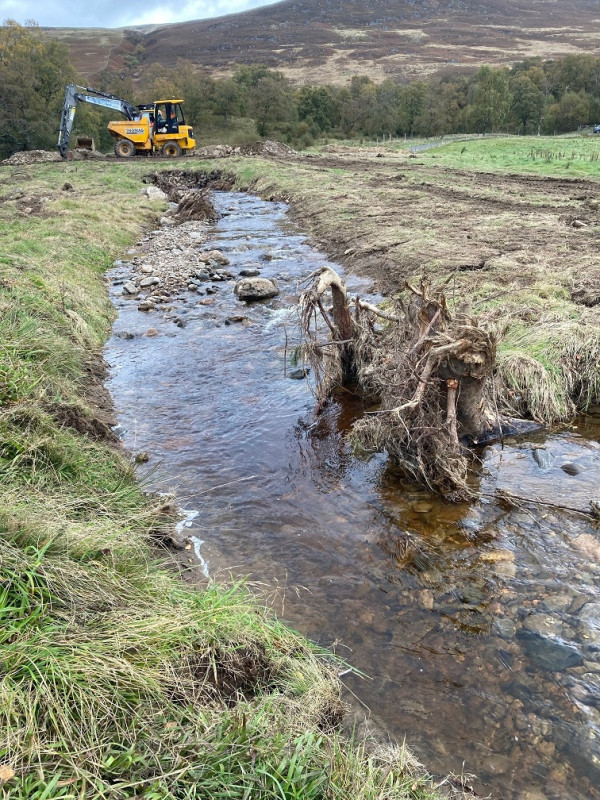
At March Burn, removing the flood embankments will see it reconnected to the floodplain, which will support flood and drought resilience and reduce pressure on the river during spate events. Realignment of the river channel has increased the length of the burn and will improve the physical habitat.
Large wood structures have been incorporated into the new channel to promote river processes, and a wetland area has been created downstream near to where it meets the South Esk. The in-stream habitat will be improved by providing a mosaic of river features, such as pools, glides, riffles and runs, that provide habitat for different life stages of salmonid fish and invertebrate species.
Partnership Chairperson, Roger Owen said: “We’re delighted that this funding has enabled us to restore the straightened section of the March Burn.
“Restoring straightened rivers by encouraging natural re-meandering processes helps revive natural flow, reduces flood risk, improves water quality, and restores habitats for wildlife. This boosts biodiversity, supports fisheries, and enhances climate resilience while providing recreational and aesthetic benefits for communities.
“The March Burn restoration joins many previous improvement projects in supporting a more resilient catchment.”
Everyone involved is committed to delivering priorities consistent with the Tayside Local Biodiversity Action Plan 2016-26, Scottish Biodiversity Strategy to 2045, Cairngorms National Park Partnership Plan 2022-27 and a number of climate adaptation priorities that continue to shape RSECP priority projects.