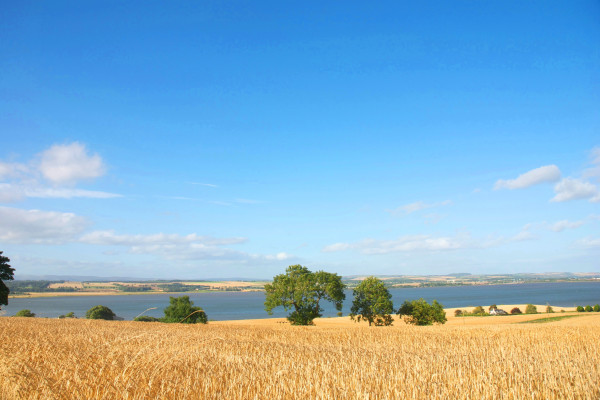
Water abstraction for agricultural use is a major pressure on the catchment.
Whilst water is required for crop spraying and livestock watering, the greatest requirement comes from crop irrigation, particularly for growing potatoes, commonly grown in the mid and lower catchment. Water is typically required when water flows are at their lowest (i.e. summer and autumn) so it is important that abstraction practices do not reduce the water flows such that the ecology of the river is negatively impacted.
In the summers of 2018, 2022 and the well-publicised drought of 2025, the Scottish Environment Protection Agency, the body responsible for issuing abstraction licences, issued 'significant water scarcity' alerts in parts of the east coast. Water abstraction licences were suspended or restricted to protect base flows, fish stocks, wetlands and prevent long term damage to watercourses.
Scientists predict that the risk of drought, particularly on the east coast, is likely to increase in the future. Scottish rivers currently experience low flow once every 40 years; by the 2050s this is predicted to happen once every 9 years.
Many farms will need to adapt to become more resilient to extreme weather events, which includes both heavy, prolonged rainfall and drought conditions. As drought conditions worsen, soils will dry out and the land will become less productive – this means potatoes and other vegetables will require substantially more irrigation than they do now. Irrigation lagoons which collect and store water during high flows in winter, ensure a reliable source of water throughout the year. Additionally, consideration should be given to adjusting cropping systems and to growing crops that require less water.
Further information on water scarcity can be found on SEPA's Water Scarcity webpage.
If you farm in the catchment, or in the wider Angus area, and would like to discuss making your farm more resilient to the effects of climate change, please contact our Land-Use and Nature-Based Solutions Project Officer.