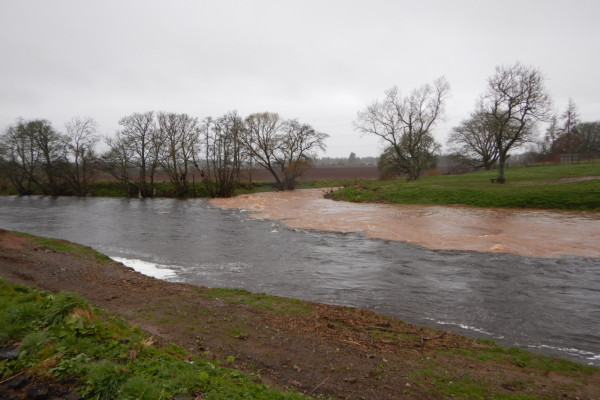
There are two main types of pollution - point source and diffuse pollution.
Point source pollution is pollution that can be traced to a single source, for example, the outflow of a pipe.
Diffuse pollution is a gradual and often unnoticed seepage, of polluting material from several sources into the environment simultaneously, making it harder to pinpoint the source and subsequently control. An example of diffuse pollution might be run-off from farms and forestry. Individually these releases can be of little significance, however collectively they can lead to a major deterioration in water quality.
Some parts of the River South Esk catchment have been heavily impacted by agricultural diffuse pollution. SEPA monitoring, which considers water quality, water resources, physical condition and fish migration, has identified three watercourses or bodies within the mid to lower catchment to be of moderate or poor overall status due to rural diffuse pollution: Pow Burn, Noran Water, and Montrose Basin*.
Nutrient enrichment and excessive quantities of sediment entering a watercourse and can lead to problems such as:
- Harsher treatment required before water can be used as drinking water;
- Disease threat carried in water from sewage contamination (animal and human);
- Smothering of Freshwater pearl mussel beds and fish spawning gravels; and
- Broader effects on river habitat such as algal blooms which occur regularly at Montrose Basin.
As the River South Esk does not flow through any heavily built-up areas, it has escaped much of the contamination and pollution that many urban rivers, such as those in Scotland’s Central Belt, have suffered in the past.
It is noteworthy that the upper catchment and the main stem of the River Esk were recorded by SEPA to be in good overall status.*
Further information on the classification of Scotland’s watercourses can be found in SEPA’s Water Classification Hub and The River Basin Management Plan for Scotland 2021 – 2027.
*Status as at 2023.